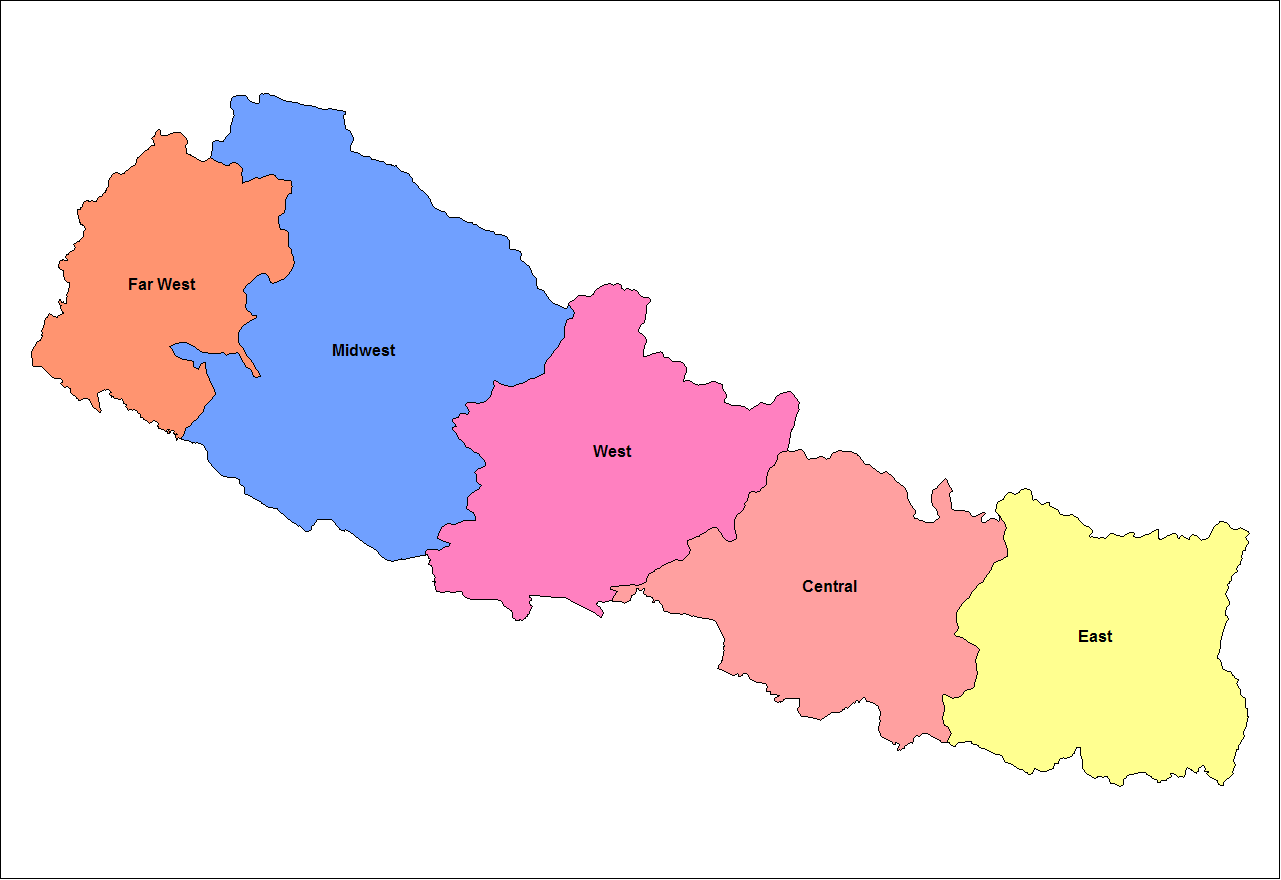
The other week we went on a field trip to the Far West region of Nepal with a team of UCEP and Teachers Without Borders Finland. This field trip was work related and the main purpose of the trip was to monitor the trainings that UCEP is conducting in the Far West and raise the awareness of technical and vocational education. The trainings that UCEP is conducting in the Far West together with Finn Church Aid and local partners are targeted for communities and youth with difficult backgrounds. It is not always possible for the students to attend the training in Kathmandu Valley where the school is so UCEP is conducting some of the trainings in their home villages. It took us around 18 hours of driving to get to the Far West from the central, where Kathmandu Valley is located..
To get to Far West you need to drive through the mountains. It's the rainy season now so there were also landslides blocking the way so we had to take longer routes. These roads are very narrow, yet so many cars, buses, trucks and bikes speed through these roads daily. There are lots of accidents, so it always is a bit nerve wrecking to pass the mountain area.


When the mountains end, the rest of the way is mainly flat "terai area". This is the South part of Nepal, closer to the Indian border. The views from the car where really beautiful even though the poverty makes the landscape less joyful. We made stops every here and there to have lunch breaks or just to enjoy a nice cup of tea. After a long day of traveling we slept the night in a surprisingly comfortable room.


Far West Terai (the flat) area was really different from the hilly/ mountain area that I am used to in here. The temperature was also a lot warmer and it was really humid so we were sweating a lot. We were wearing these teachers without borders t-shirts which were literally glued to our skin. In comparison, Kathmandu Valley area is really cool. It is the rainy season now so the temperature is around 20-30 degrees, but since Kathmandu itself is around 1300 meters high up, it's not too humid.


After arriving to the first destination, mobile based training in masoning, we had a meeting with the students and the teachers from this training. UCEPs partner organization in that area had always made all the arrangements before hand so it was really easy for us. We wanted to hear how the training was going and what where the biggest challenges that they were facing. Another purpose for this visit was to raise the awareness of technical and vocational education in this village but fortunately the people in here seemed to be quite aware of the importance of education already. The students seemed to be motivated but the biggest issue there was the lack of tools as well as lack of practical sessions. We, teachers without borders volunteers, also conducted some interviews with the students and the students where very eager and happy to tell us their stories. Thanks to these interview we also got the chance to hear some individual issues that the students were facing. Now we can try to improve this training and find new ways to help the people in need.


After the first visit it was time to get a good night sleep and hit the road again the next morning. We had two training left and these were situated more on the hillie areas so there was some travelling ahead of us again. During the travelling we got the chance to admire these beautiful views. The foggy weather made the hills look even more magical..


The next meeting was with the students and teachers of tailoring trade. We went to monitor the tailoring trades in two villages and in both of the meetings we were very warmly welcomed. Apparently they had been waiting us the whole day with enthusiasm and we were also really grateful to meet them. I also got the chance to tell them a little it about Finland, since they were excited to hear about my country as well. Meeting these girls from the tailoring trade really made me emotional though. All these young girls were from really poor backgrounds; some had been living with wealthier land owners and working in their houses as a "house keeper" in exchange for food and a clean set of clothes. These girls cooked the food, cleaned the house and basically worked as servants for the owner of the house. This tailoring training was really an opportunity for them to change their lives and to start up their own business as a tailor. Most of these girls were already married and had children and some of them told us that they had gotten married already before the age of 18. Arranged marriages and child marriages are not uncommon in Nepal, especially in the villages where the caste system and traditional believes have still a very strong influence on the lives of these people.

In the other village, the girls in the tailoring training were also from very poor backgrounds. Their families didn't own much land and they got to live in these small huts (picture of a picture below) in exchange of farming the land of a wealthier landowner. This kind of bonded labor is forbidden in Nepal by law but it still might exist in some parts of Nepal where the people don't have any other possibilities for an income. Getting skills training gives the opportunity for these women to empower themselves and start up their own business. These women were so motivated to join the training that they walked everyday 3 hours all together to the training and back. Unfortunately the training is now centered in the middle of all students so it would not be a good idea to change the location. Busses go very randomly and rarely so this option is not convenient either. The best option at the moment is to make the training as good as possible since the women need to walk. After discussing with the students we found that the biggest need was for snacks. All the students in the tailoring training were lacking of food during the training and they said that they get hungry during the day. As they all don't have the opportunity to go home for luch it would be really important to provide snacks for the students. Another challenge that the students were facing was the lack of sewing machines. After graduating not all are able to afford their own sewing machine which will create problems for opening their own tailoring shop. This kind of post-training is also something to be solved in the future.


Last but not least (the opposite!!) we got the opportunity to visit a local community. To reach this community we walked half an hour through the mountains and rice fields and we were really happy to see how warmly we were welcomed there. The meeting took place in a small house and so many people were interested in this meeting that not all could fit inside. Especially the women in this community seemed to be very active as they asked lots of questions and hushed each other if some of them were talking while we were talking. The purpose of this community visit was to share information about technical and vocational education as well as the educational opportunities that UCEP together with Finn Church Aid is providing in sano Thimi Technical School. We also talked about the importance of education in general and the opportunities that it can provide. We were lucky to find one former student of Sano Thimi Technical School from the village, who also shared his views about the training and how he has benefit from it. The people in this community were very interested and they listened very carefully what we had to say. Unfortunately due to the lack of resources, not everyone gets to attend the training but we were really happy to reach this many people so that the most neediest and motivated people can get new opportunities for income.


***
Muutama viikko taaksepäin, olimme työn puolesta noin viikon mittaisella kenttämatkalla Länsi Nepalissa. Kenttämatkan tarkoitus oli monitoroida UCEP:n järjestämää opetusta kaukaisilla alueilla sekä herättää tietoisuutta ammatillisen koulutuksen tärkeydestä. Matka Länsi-Nepaliin, eli Far West alueelle kesti noin 18 tuntia, sillä tiet kulkevat lähinnä vuoristojen läpi ja maanvyöryjen vuoksi osa teistä oli suljettu. Tiet ovat melko vaarallisia, sillä ne ovat todella kapeita, mutta silti kaikki mahdolliset ajoneuvoot kaahailevat teitä pitkin mukamas niin kiireisinä. Matkan varrella näimme ojassa olevia rekkoja, kolareita ja maanvyöryn aiheuttamia tuhoja. Tie oli todella pomppuisaa ja toisinaan koin matkapahoinvointia. Pomput kuitenkin tasaantuivat päästyämme vuoristojen jälkeen"Terai-alueelle". Terai on Eteläistä Nepalia, lähinnä tasankoa. Tällä alueella ilmasto on myös lämpimämpi ja kosteampi, mutta onneksi autossa oli tuuletus. Pysähtelimme matkan varrella syömään lounasta tai juomaan teetä, mutta muuten matka oli melko pitkälti yhtäjaksoista ajamista.
Ensimmäinen monitoroinnin kohteemme oli muurarikoulutus. Opetus viedään siis oppilaiden omaan kylään, sillä kaikilla ei välttämättä ole mahdollisuutta osallistua UCEP:n koulutiloissa järjestämään opetukseen. Vierailun tarkoituksena oli lisätä tietoisuutta ammatillisesta koulutuksesta sekä kerätä tietoa oppilaiden sekä opettejien kohtaamista haasteista koulutuksen suhteen. Vierailemalla paikan päällä, saamme parhaiten tietoa, miten koulutusta voidaan parantaa tulevaisuudessa sekä minkälaista kysyntää / potentiaalia koulutukselle on. Ensimmäinen monitorointi tuntui olevan suhteellisen helppo; oppilaat olivat motivoituneita sekä tietoisia ammattilisesta koulutuksesta. Työkaluista tosin oli pulaa sekä käytännön opetusharjoituksista. Haastattelimme myös toisen Opettajat ilman rajoja vapaaehtoisen, Sunilin kanssa oppilaita. He kertoivat tarinoitaan erittäin innokkaasti.
Seuraavat monitorointi kohteet olivat räätäli/ vaatturialan koulutukset. Kävimme monitoroimassa koulutuksia kahdessa eri kylässä ja keskustelimme myös yksittäisten oppilaiden kanssa saadaksemme tarkempaa tietoa heidän koulutukseen liittyvistä kokemuksistaan. Haastattelimme vapaaehtoisia oppilaita myös ajatuksenamme kirjoittaa heidän tarinoistaan artikkeleita ja yllättäen moni halusikin kovasti päästä kertomaan tarinaansa. Itselleni näiden nuorten vaatturiopiskelijoiden tapaaminen oli erittäin tunteita herättävää, sillä tytöt tulevat todella haastavista taustoista. Osa heistä on toiminut rikkaampien maanomistajien talossa kotiapulaisena ruokaa sekä vaatteita vastaan. He siis siivoavat, tekevät ruoan ja pitävät huolta yleisistä kodin askareista. He asuvat myös kaukana omasta perheestään, vaikka ovat tuona aikana olleet alaikäisiä. Osa naisista puolestaan tulee erittäin köyhistä perheistä, joilla ei ole varaa omaan kunnolliseen kotiin. He saattavat asua pienessä bambumajassa, jonka vastineeksi he työskentelevät maanomistajien tiloilla, viljellen heidän maitaan. Vaatturin koulutus mahdollistaa siis näille rohkeille nuorille naisille elinkeinon sekä mahdollisuuden oman yrityksen perustamiselle. He ovat erityisen motivoitunita kouluttautumaan; osa tytöistä kävelee koulutukseen jopa yhteensä 3 tuntia päivässä. Koulutuksen sijaintia ei kuitenkaan voi vaihtaa, sillä tällä hetkellä se on on keskellä kaikkia oppilaita. Lisämotivaatiota voisi kuitenkin tarjota ruon tarjoaminen, sillä moni tytöistä kertoi olevansa nälkäinen koulutuspäivän ajan, eikä heillä useinkaan ole mahdollisuutta mennä syömään omiin koteihinsa. Lisäksi huolta aiheutti monille oppilaille tuleva työllistyminen, sillä oman vaatetus liikkeen avaaminen vaatii myös oman ompleukoneen. Ompelukone maksaa noin 80 USD, mutta monillakaan ei ole tähän varaa. Olemme erittäin tyytyväisiä, että onnistuimme keräämään arvokasta sekä hyödyllistä tietoa oppilaiden oloista.
Viimeinen etappimme kenttämatkalla oli eräässä pienessä kyläyhteisössä, jossa kävimme herättelemässä kyläläisiä koulutuksen tärkeydestä. Kävelimme kylään riisipeltojen sekä vuorten läpi yhteensä puoli tuntia. Kylässä meitä odotti erittäin lämmin vastaanotto ja kokoonnuimme innokkaiten kuulijoiden kanssa pieneen tupaan. Tupa oli täynnä kyläläisiä, etenkin kylän vanhemmat naiset istuvat korvat tarkkana kun puihimme vuoronperään. Kerroimme jälleen kerran ammatillisen koulutukse tärkeydestä ja niistä mahollisuuksista, joita koulutus voi tarjota. Löysimme myös kylästä erään nuoren miehen, joka oli valmistunut UCEP:n koulusta ja hän kertoi omista kokemuksistaan sekä elintasosta, jonka koulutus hänelle mahdollisti. Olimme erittäin tyytyväisiä vierailusta sekä positiivisesta vastaanotosta, jonka saimme. Kenttämatka täytti kaikinpuolin tavoitteemme ja olimme erityisen tyytyväisiä siitä, että tavoitimme potentiaalisia tulevia ammatillisen koulun opiskelijoita. Järjestössä työskentely vaatii erityisen pitkäjänteistä otetta sekä suurta epävarmuuden sietokykyä. Kuitenkin ne onnen tunteet, kun muutosta on havaittavissa, ovat korvaamattomia! =)

-Elisa-


